.png)








Beyond the hype: why AI won’t replace the human in HR
Published date: 18 June 2025
AI is moving fast in recruitment. From AI-written job ads to automated screening, sourcing and even interview support, the promise is speed, scale and efficiency. But what is its impact on the quality of the hiring process?
Faye Walshe, Global Director of Innovation and AI at Robert Walters, sits at the intersection of technology, talent and business strategy. In this interview, Faye shares what AI is actually changing in recruitment, where the risks lie, and why human judgement is becoming more important, not less, in a world of automation.
AI is everywhere in recruitment right now. What’s really changing for employers?
‘What we’re seeing is an explosion of tools. Recruitment and HR technology has become a billion-dollar industry, with new solutions launching almost daily. The possibilities seem endless: from automatically generating job ads, to AI-written outreach messages, to tools that can build a talent pool before you’ve even posted a job ad. So on paper, that sounds incredibly efficient. And in some ways it is, as HR and hiring managers are under huge pressure. If you receive hundreds of applications for a single role, it’s not realistic to review them all manually.
But along with speed, these tools also bring complexity. If we look at tools for cv selection: the way these tools work is not transparent. It’s essentially a black box. If you don’t know what they optimise for, what data they rely on, or what they might be missing... Then that’s something to be very cautious about.’
What other risks of using AI in hiring do you see?
‘There are also very real security risks emerging. We’re seeing cases of deepfake technology being used in live video interviews, where candidates mask their identity entirely. In the US, some organisations have even hired individuals who later turned out to be fraudulent actors.
This is why many employers are re-introducing final face-to-face interviews, even after remote processes. They want to verify identity, validate experience and reduce risk. Ironically, the more digital hiring becomes, the more valuable human checkpoints become.’
Are we seeing an ‘AI arms race’ between candidates and employers?
‘Absolutely. Candidates are using AI just as actively as employers. Many now paste job descriptions and their CVs into tools like ChatGPT to optimise their applications. That of course isn’t new advice, as you always hear: Tailor your CV to each job you apply for!’. AI just makes it so much faster.
But there are also tools that automatically apply for dozens or even hundreds of roles while you sleep. That’s driving application numbers up globally and creating a strange paradox. AI makes the process quicker for everyone, but also noisier and in a way more arbitrary.
As a result, employers then look for more filtering, more automation, more efficiency. And so the cycle continues. It’s machines talking to machines, and the risk is that you end up hiring based on keywords and surface-level matches, rather than genuine experience and potential.’
Does AI change how organisations should think about talent and skills?
‘Yes, fundamentally. Organisations that are at the forefront of using AI are already asking themselves before hiring: does this role need a human, an AI agent, or a combination of both?
At junior levels, recruitment should increasingly focus on learning agility, problem-solving and people skills.
If we look at senior level, leaders need to understand how to deploy AI strategically, to determine where it adds the most value. Overall the rise of AI makes EQ more important in the workplace. Communication skills, influencing, critical thinking – these become become more valuable, not less. If you can combine AI capability with strong human insight, you become incredibly valuable in today’s workforce.’
Conclusion
AI is transforming recruitment, but not in a simplistic ‘automation replaces people’ way. While technology can help manage scale and speed, it also introduces new risks, complexity and blind spots.
For organisations the challenge is not in deciding whether to use AI, but how to use it responsibly. The organisations that succeed will be those that combine smart technology with human judgement, governance and trust. As Faye Walshe puts it:
"the real magic in recruitment still happens when two people sit across from each other and realise they are more than a CV and a job description. AI can support that moment, but it can’t replace it."
More information
Robert Walters Future of Work Advisory Services provides tailored advice and guidance on implementing AI within the recruitment process. Learn more about Robert Walters Future of Work or request a personal advisory session.
Related content
View All
5 new hiring challenges in 2025 and the interview questions to tackle them
The job market is evolving faster than ever. To attract and retain talent in 2025 and beyond, you need to keep innovating - especially in your interviews. Hiring today is about more than just a resume or diploma. It's about finding the right match, someone who fits the culture, has the right persona
Read More
More professionals are choosing interim management – and don’t want to go back
The European interim management market is expanding rapidly. An increasing number of professionals are consciously opting for flexibility, variety and impact in their careers. A recent survey conducted by international talent solutions provider Robert Walters reveals: the move from permanent employm
Read More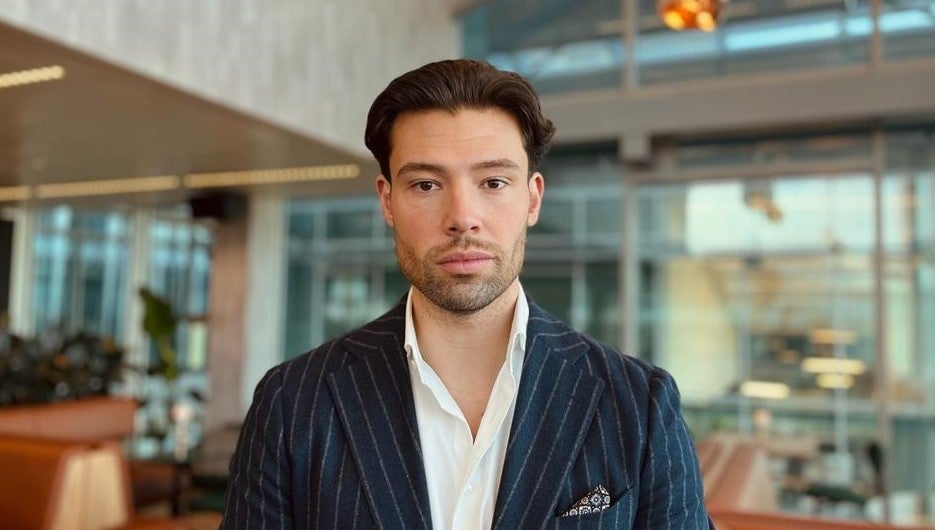
ESG: how to turn the burden into a competitive advantage?
ESG will be an integral part of business in 2024. From banks and insurers to listed companies, almost all European businesses are affected by strict sustainability reporting requirements. In 2023, Robert Walters organised two events dedicated to ESG, including a roundtable discussion. This roundtabl
Read More